

Industrial construction solutions for manufacturing, warehouses, and heavy facilities
Industrial construction builds the infrastructure your operations rely on. This guide explains the core services—from plant build-outs to distribution centers—that our team at ACME Construction delivers, and why sustainable, efficient design matters for long‑term performance. We cover service types, project management approaches, green building options, renovation strategies, and the specialized structures common to industrial work so you can make informed decisions for your next manufacturing project.
What are the key types of industrial construction services?
Industrial construction includes a range of services shaped to specific operational needs. Identifying the right mix—site prep, structural work, MEP systems, and specialized finishes—helps businesses optimize throughput, safety, and lifecycle cost.
Manufacturing facility construction: design and build essentials
Building a manufacturing facility starts with layout and process-driven design. Plans must support workflows, equipment access, material flow, and worker safety. Typical structural systems use steel framing and reinforced concrete foundations to support heavy machinery and dynamic loads. Equally important is code compliance—local building regulations and industry standards guide everything from egress to fire protection to keep operations running and people safe.
Plant design increasingly uses digital tools and data to improve space use and adaptability.
AI in facility design and layout
AI-based tools are changing how facilities are planned: they model workflows, test layouts, and suggest spatial arrangements that cut waste and improve throughput. From process-planning AI to AutoCAD plugins and spatial-design systems, these solutions help teams balance equipment, storage, and human workflows for greater efficiency and resilience.
Use Artificial Intelligence into Facility Design and Layout Planning Work in Manufacturing Facility, SD Kilari, 2025
Industrial warehouse and distribution center construction
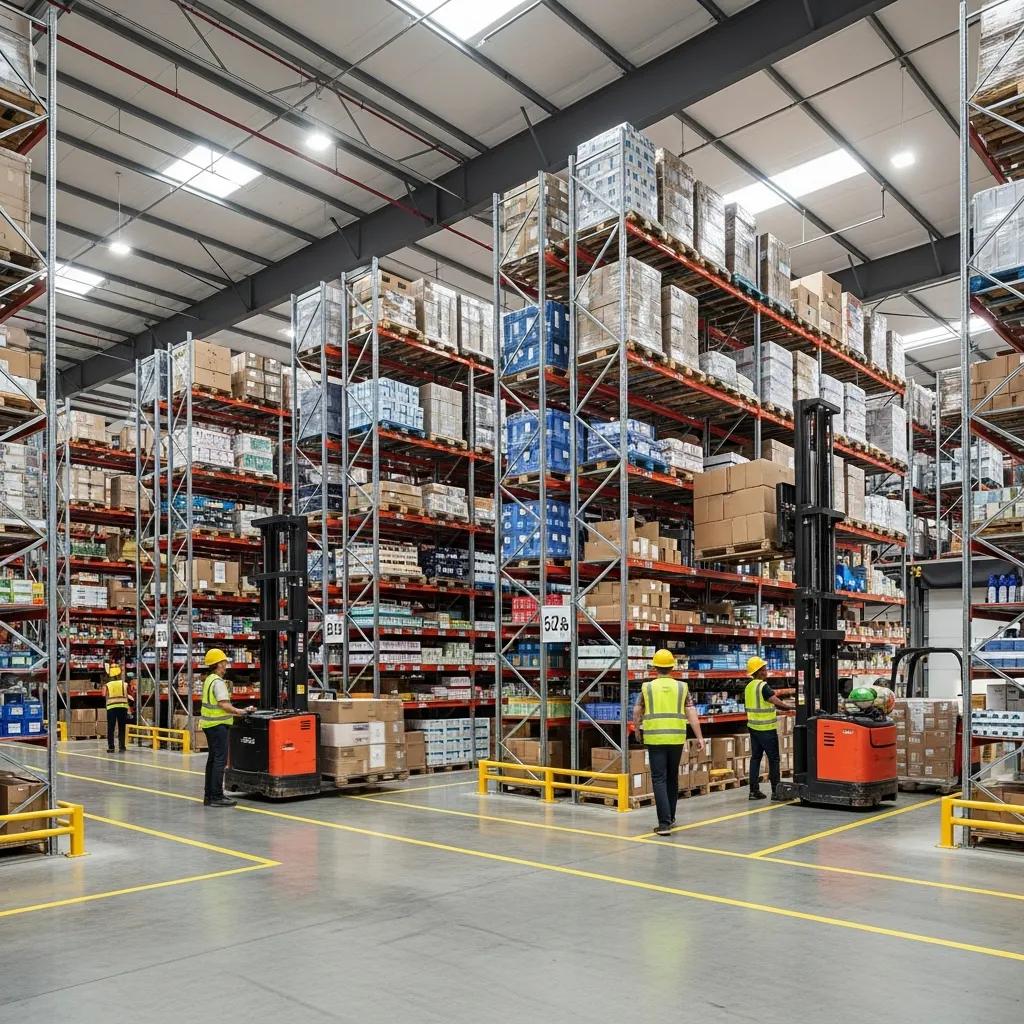
Warehouse and distribution construction focuses on flow, storage density, and safety. A well-executed layout improves picking efficiency and reduces handling time, while systems like fire suppression, ventilation, and clear access routes protect inventory and people. Designs should also allow for future growth—modular systems and scalable layouts make it easier to expand capacity without costly overhauls.
Good warehouse design ties directly into operational playbooks and inventory strategy—not just the building footprint.
Warehouse logistics and operational management
Warehouse operations are a core part of the supply chain that affects cost, speed, and service. Effective warehouses are planned around receiving, storing, inventory control, picking, and shipping—each step requiring clear processes and the right environment. Design and operations must work together so facilities support efficient, error‑free workflows.
Warehouse Logistics and internal distribution optimization, 2011
How does ACME Construction deliver heavy industrial building projects?
We combine experienced field crews, purpose-built equipment, and disciplined project management to deliver heavy industrial buildings on schedule and within budget. Safety and quality are built into every phase—from site preparation through final commissioning.
Specialized heavy construction techniques and materials
Heavy projects demand methods and materials selected for durability and precision. We rely on high‑strength concrete, structural steel, and controlled placing techniques to meet load and vibration requirements. Heavy lifting gear, engineered shoring, and preconstruction planning help keep work safe and predictable on demanding sites.
Project management and safety protocols in industrial builds
Strong project controls keep complex builds on track. We use phased schedules, regular progress reviews, and clear communication channels with owners and subcontractors. Our safety program includes ongoing training, OSHA-aligned procedures, toolbox talks, and site-specific risk assessments so teams can work efficiently with minimal disruption.
What are the benefits of sustainable industrial building solutions?
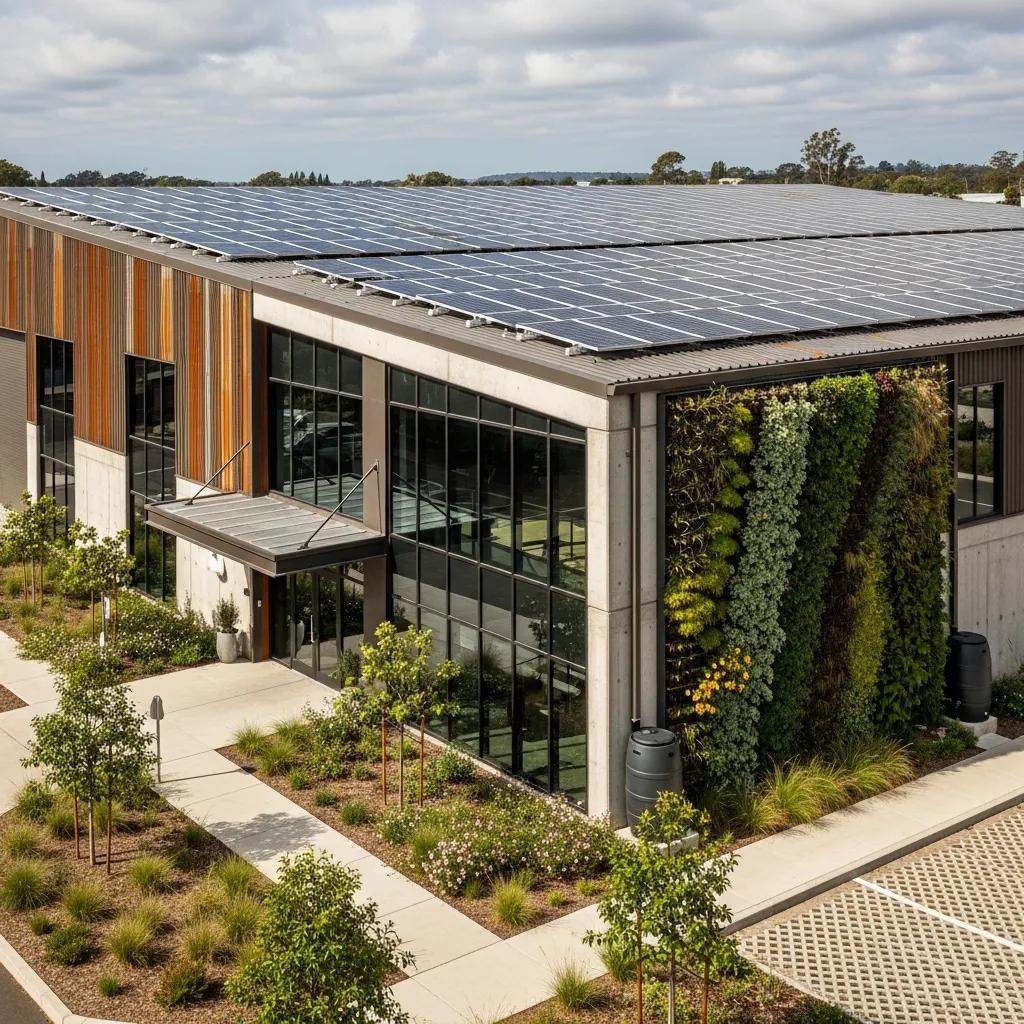
Sustainable industrial buildings reduce operating costs, improve resilience, and limit environmental impact. Energy-efficient systems, durable materials, and renewable power options can lower utility bills and support corporate sustainability goals—often paying back over the facility’s lifetime.
The move toward greener industrial construction is driven by regulation, cost savings, and long-term risk reduction.
Sustainable industrial construction practices
Research into sustainable industrial construction examines material impact, energy use, waste, and certification paths. Life‑cycle assessments and renewable integrations (like solar) help quantify benefits and trade-offs. Overcoming barriers—material choices, change resistance, and certification effort—requires practical strategies: choose lower-impact materials, improve energy performance, and adopt technologies that support both efficiency and compliance.
Advancing Sustainability in Industrial Buildings: Materials and Construction Practices, 2024
Energy-efficient design and green building practices
Energy-focused design uses high‑performance insulation, efficient HVAC systems, LED lighting, and renewable sources to cut consumption. Thoughtful envelope design and controls reduce peak demand and operating expense while improving comfort and uptime.
Incorporating automation and smart technologies in industrial facilities
Automation and connected systems increase throughput and accuracy. IoT sensors, automated material handling, and AI-driven analytics deliver real‑time insight into equipment health, energy use, and process performance—helping teams act faster and plan maintenance before small issues become big problems.
How does ACME manage industrial facility renovation and expansion?
We plan renovations to protect ongoing operations. That means phased work, temporary protections, and close coordination so production and logistics keep moving while upgrades proceed.
Modernizing manufacturing plants and warehouses
Modernization can include retrofitting systems, reconfiguring layouts, and upgrading electrical and control infrastructure to support new equipment or automation. Our approach balances cost, disruption, and upside—targeting changes that raise productivity and extend asset life.
Ensuring operational efficiency during industrial upgrades
Minimizing downtime requires detailed sequencing and communication. We build phased schedules, supply staging plans, and contingency measures so critical operations stay online. Regular check‑ins with your operations team keep expectations aligned throughout the project.
What specialized industrial structures does ACME construct?
We deliver structures tailored to industry needs—each engineered to meet specific use, code, and environmental requirements.
Pre-engineered metal buildings and cleanroom construction
Pre‑engineered metal buildings provide quick delivery, lower upfront cost, and flexibility for future changes. For controlled environments, our cleanroom teams build to tight tolerances and required classifications, serving sectors like pharmaceuticals and electronics where contamination control is essential.
Industrial concrete, foundation, and flooring services
Concrete work forms the backbone of industrial facilities. We provide foundations, heavy-duty slabs, and precision floors designed for forklift traffic, heavy equipment, and flatness tolerances needed for modern manufacturing and warehousing.
| Service type | Description | Key benefits |
|---|---|---|
| Manufacturing facility construction | Design-build services tailored to production processes and workflow | Improved efficiency, code compliance, worker safety |
| Warehouse construction | Layouts and systems optimized for storage, picking, and distribution | Better space use, safety, scalability |
| Heavy industrial projects | Specialized methods and materials for high-load, heavy-equipment sites | Structural durability, precision, safer operations |
Choosing the right team matters. At ACME Construction we combine field expertise, disciplined planning, and a focus on sustainability so you get facilities that perform safely and efficiently across their life cycle. Whether you’re building new, expanding, or modernizing, we bring practical solutions that meet your operational goals.
Frequently asked questions
What factors should be considered when selecting an industrial construction service provider?
Look for proven experience in your industry, strong project controls, and a safety-first culture. Review similar projects in their portfolio, confirm relevant certifications, and assess their approach to sustainability. Clear communication and collaborative planning are also critical—your contractor should be able to work alongside operations to meet schedules and adapt as needs change.
How can businesses ensure compliance with safety regulations during industrial construction?
Hire a contractor with a documented safety program and a record of compliance. Expect regular training, site-specific risk assessments, and enforcement of OSHA-aligned procedures. Include safety officers in planning and maintain open lines of communication so safety measures are integrated from design through handover.
What are the latest trends in sustainable industrial construction?
Key trends include on‑site renewables, higher-efficiency HVAC and lighting, low‑impact materials, and digital energy monitoring. Smart controls and IoT-driven energy management let teams track consumption and optimize systems. Many owners also pursue green certifications to validate performance and meet stakeholder expectations.
What role does technology play in modern industrial construction?
Technology improves accuracy and coordination. BIM supports clash detection and sequencing, project management software streamlines scheduling, and automation reduces manual handling on site. Data analytics and AI help predict maintenance needs and optimize operations after turnover.
How can companies manage disruptions during facility renovations?
Plan in phases, protect active areas, and maintain clear communication with operations. Temporary workarounds—shifted workflows, staging areas, or partial shutdowns—can keep critical functions running. Experienced contractors will provide detailed schedules and contingency plans to limit downtime.
What are the benefits of pre-engineered metal buildings in industrial construction?
Pre‑engineered metal buildings offer fast delivery, predictable costs, and flexible layouts. They require less site labor, are simple to maintain, and can be energy efficient when combined with good insulation and mechanical systems. Their durability and adaptability make them a reliable option for many industrial uses.