
Choosing a home builder is critical when building a new house – and the right one can mean the difference between a stressful, budget-busting ordeal and a smooth, predictable path to your forever home. The best builders deliver quality craftsmanship, transparent communication, and a structured process that keeps your project on time and on budget without requiring you to micromanage every detail.
If you’re planning a custom home, a knock-down rebuild, or a major new build in 2026, you already know the fears: cost blowouts from vague contracts, delays that stretch months beyond the promised completion date, poor workmanship hidden behind fresh paint, and communication breakdowns that leave you guessing. These are real risks – but they’re avoidable when you work with the right professional.
Here’s what this page will help you learn:
How to choose a home builder who fits your lifestyle and budget
What the step-by-step building process actually looks like from first call to move-in
Key contract types, warranty structures, and pricing options you need to understand
What separates a great experience from a nightmare – and how to tell the difference before you sign
Finally, a Home Builder Built Around Your Lifestyle (Not Just a Floor Plan)
A home builder isn’t just a construction vendor who pours concrete and frames walls. The right builder is a partner in turning your vision into a house that fits how you actually live – today and for decades to come. That means treating the build as a long-term investment in your family’s comfort, health, and financial security.
Most homeowners starting this process face the same pain points: confusing quotes loaded with exclusions, hidden variations that inflate the final price, an overwhelming number of design and finish decisions, and genuine uncertainty about how long the whole thing will take. Building a home typically follows a structured process from initial ideas to move-in day, and a modern home builder helps you customize the design and features along the way while managing everything – from concept design through permits, construction, inspections, and handover – so you don’t have to coordinate it yourself.
Today’s builds reflect real lifestyle shifts, not just square footage. AIA’s Home Design Trends Survey confirms growing demand for layout flexibility, outdoor living connections, daylighting, and spaces that adapt to changing needs. Here’s what that looks like in practice:
Multigenerational living – Self-contained suites or flexible guest wings for aging parents or returning adult children
Work-from-home spaces – Dedicated offices with proper soundproofing, lighting, and data connections
Energy-efficient features – Solar integration, high-performance insulation, heat pumps, and water-saving systems that save money every month
Aging-in-place design – Zero-step entries, wider hallways, no-lip showers, and accessible layouts that let you stay in your home as life changes
Indoor-outdoor connections – Covered outdoor rooms, bifold doors, and seamless transitions that expand usable space
Custom homes are tailored to individual client preferences and lifestyle – and that’s the whole point. The builder’s job is to bring these possibilities to the table, not just execute a floor plan you found online, so
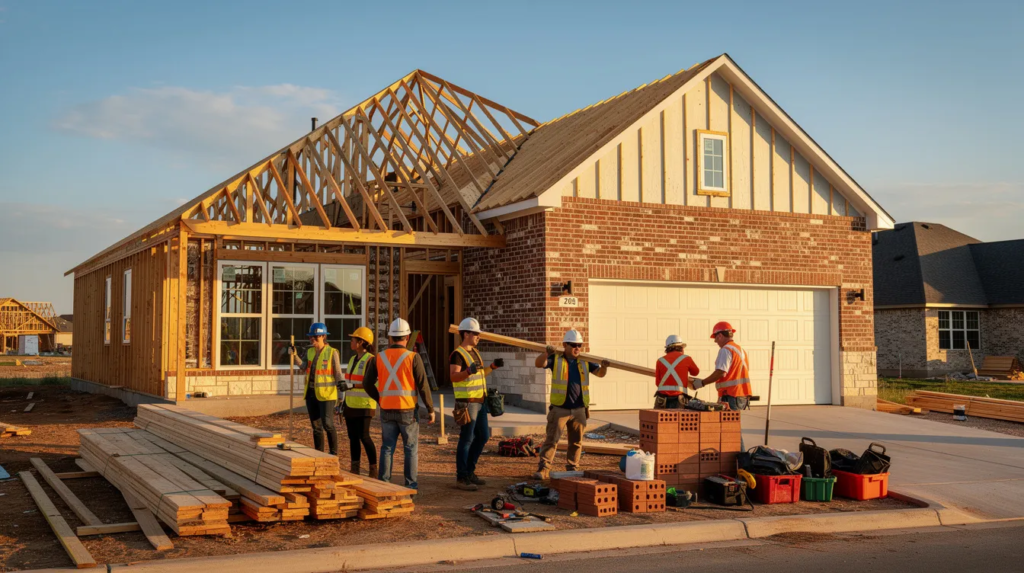
you can enjoy a home shaped around how you live.
Why The Right Home Builder Makes (Or Breaks) Your Project
Your builder choice has more impact on the final outcome than the land you buy, the plans you select, or the finishes you pick. A skilled builder turns good plans into a great home; a poor one turns great plans into an expensive headache.
So what does a home builder actually do day-to-day? Far more than most people realize. A licensed, insured builder is responsible for coordinating every trade on site – from excavation and concrete to electricians, plumbers, carpenters, tilers, and painters. They manage the construction schedule, enforce quality control at every stage, ensure compliance with state and regional building codes, arrange mandatory inspections, administer the contract, process selections and change orders, and ultimately deliver a home that meets both regulatory standards and your expectations.
This is fundamentally different from hiring a single contractor or a design-only firm. DC Builders, for example, has over 20 years of custom home building experience and specializes in timber frame and hybrid wood structures – demonstrating the kind of focused expertise that a general handyman or architect alone simply can’t replicate. Builders should carry general liability insurance and workers’ compensation, protecting both you and the trades working on your site.
The risk of choosing purely on the lowest bid is well-documented: compromised materials, subcontractors with minimal oversight, thinner finish work, and unexpected exclusions that only surface after you’ve signed. These shortcuts show up after handover – when the builder has your money and you’re left managing defects.
Key responsibilities of a reputable home builder include:
Trade coordination and scheduling across all construction stages
Quality assurance checks at critical milestones (foundations, framing, lock-up, rough-ins, finishes)
Code compliance and liaison with local building authorities
Managing permits, inspections, and certificate of occupancy
Contract administration including change orders, allowances, and payment draws
Warranty support and defect resolution after handover
Key Benefits of Working With a Professional Home Builder
Working with a professional builder isn’t just about getting a house built. It’s about getting it built right – with fewer surprises, better quality, and outcomes you can actually measure. Here’s what you should expect:
Core Benefits You Should Expect
Predictable Budget Control – A reputable builder should provide transparent written estimates and clear contract specifications. With a fixed-price (lump-sum) contract, the builder commits to a set total price for an agreed scope, absorbing cost overruns except for owner-initiated changes. Cost-plus contracts offer more flexibility but shift price risk to you. Construction contracts should clearly outline total price, payment schedule, and allowances. Either way, a good builder minimizes variations and keeps your budget on track.
Realistic Timelines & Fewer Delays – The home building process typically takes 12 to 18 months, and a 3,000 sq. ft. custom home typically takes 9 to 12 months to build. Experienced builders protect against common 2024–2026 supply chain issues and labor shortages through strong trade networks, clear selection deadlines, and buffer periods built into the schedule.
Code-Compliant, Structurally Sound Construction – Building safety requires compliance with state and regional codes. Your builder ensures engineering oversight, arranges required inspections (foundation, framing, rough-ins, insulation, final), and delivers a structurally sound home. An independent inspector may be hired during key stages of construction to ensure quality beyond minimum requirements.
Design Guidance That Fits How You Live – Skilled builders contribute improvements you wouldn’t think of on your own: better storage solutions, optimized traffic flow, natural light placement, multi-use rooms, and outdoor connections. Custom home designs can include various architectural styles, meaning your home reflects your style and needs, not just a catalog template.
Warranty & Long-Term Support – Builders’ warranty periods typically include coverage for workmanship and structural elements. The industry-standard “1-2-10” warranty framework provides one year for general workmanship and materials, two years for mechanical systems (plumbing, electrical, HVAC), and ten years for major structural defects. Exact terms vary by state and builder, but this structure gives you clear recourse if issues arise.
Streamlined Permits & Approvals – Ensure the builder can handle permits and building code compliance during construction. An experienced team knows how to navigate local planning departments, zoning requirements, and neighborhood covenants efficiently – saving you weeks or months of delays that DIY permit applications often cause.
How Working With a Home Builder Actually Works (Step-By-Step)
The process includes design, construction, and finishing stages – but understanding what happens at each step removes the mystery and puts you in control. Here’s a clear overview from first consultation
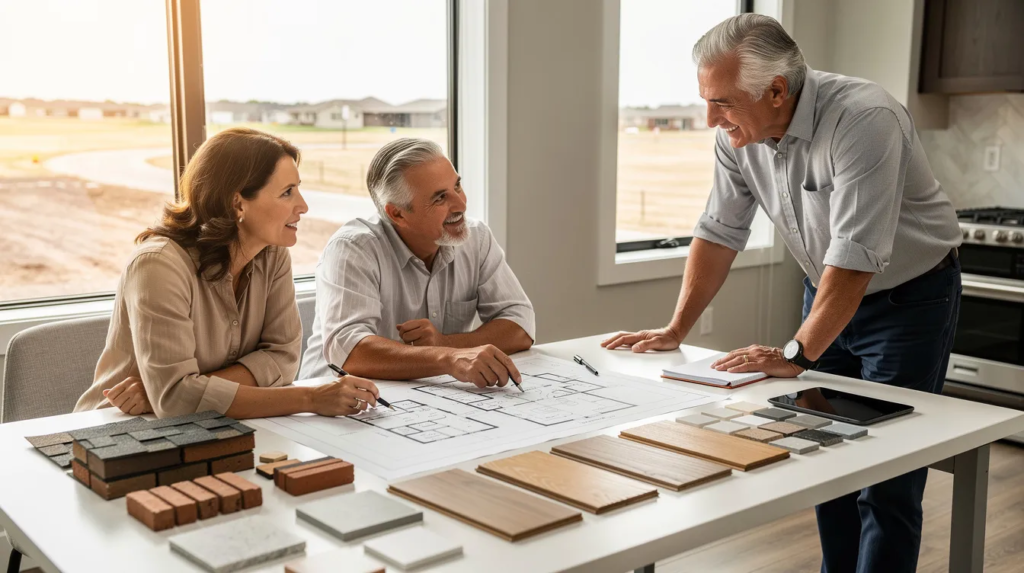
through move-in.
Step 1: Initial Consultation, Site Assessment & Concept Design
Everything starts with a conversation. In your first meeting, a good builder will discuss your budget, must-haves versus nice-to-haves, preferred timelines, and style preferences. Planning includes feasibility analysis and site preparation considerations that shape every decision downstream.
A typical site visit covers slope and drainage, access for construction vehicles, orientation for sunlight and prevailing winds, existing services (water, sewer, power), and potential excavation challenges. This assessment prevents expensive surprises once construction begins.
Early deliverables include concept sketches, indicative pricing, and a high-level build schedule. For most standard custom homes, this phase takes days to a few weeks – not months. The goal is to confirm that your dream and your budget are aligned before investing in detailed plans.
Step 2: Detailed Plans, Selections & Contract Signing
From concept, the builder progresses to detailed architectural drawings and engineering. This is where your home takes real shape on paper: room dimensions are locked in, structural systems are designed, and energy performance is modeled.
The selections process follows: fixtures, finishes, appliances, windows, roofing materials, and energy-efficient options like solar panels or heat pumps. Perry Homes includes smart home technology in all their builds, reflecting how modern builders increasingly integrate technology into standard inclusions rather than treating it as an add-on.
The builder then refines pricing into a fixed-price or itemized contract with clear allowances. Key contract elements homeowners must review include:
Inclusions/exclusions list – Every item that is and isn’t part of the agreed price
Payment schedule – Stage-based draws tied to construction milestones
Change-order process – How modifications are priced, documented, and approved before work proceeds
Dispute resolution – Mediation or arbitration clauses that protect both parties
Look for builders with a proven experience with your desired home style and size before you commit at this stage.
Step 3: Construction, Inspections & Handover
The construction process includes planning, design, permits, construction, and inspections – and the build phase is where coordination matters most. Major milestones include:
Site preparation & foundations – Excavation, footings, slab or basement pour
Framing – Structural walls, roof trusses, and overall building envelope
Lock-up – Windows, exterior doors, and roofing installed; the house is weather-tight
Rough-ins – Plumbing, electrical, and HVAC systems installed before walls are closed
Interior finishes – Cabinetry, flooring, tiling, painting, fixtures, and appliances
Practical completion – Final cleanup, landscaping, and quality checks
Final inspections by local authorities verify compliance with building codes before move-in. A punch list is created during the final walkthrough to identify minor issues before moving in – cracked tiles, paint touch-ups, sticky doors – and the builder resolves these before or shortly after handover.
Post-move-in, your defect liability period begins (typically 3–12 months depending on contract and jurisdiction), during which the builder addresses any issues that emerge with normal use.
What Makes One Home Builder Different From Another?
Not all builders are equal, even when their pricing looks similar on paper. The difference between a good build and a great experience often comes down to systems, specialization, and commitment to
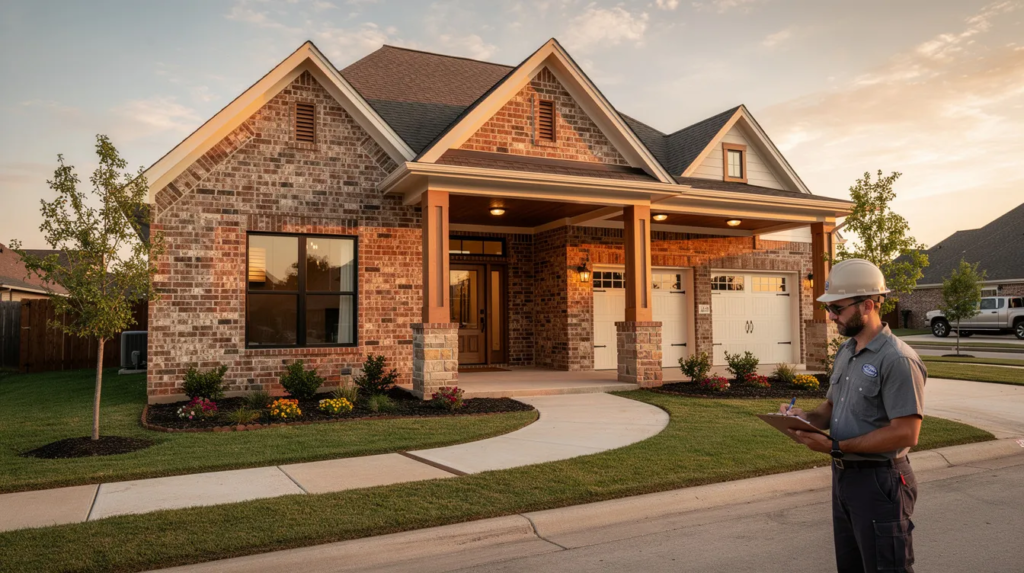
communication – not just the sticker price.
Key Differentiators to Look For
Transparent Communication Systems – The best builders use client portals, weekly site updates with photo progress reports, and provide a single point of contact. If your calls go unanswered during the quoting phase, they won’t improve during construction.
Documented Build Process – Look for builders who can show you their step-by-step process with estimated dates and checklists. Perry Homes was ranked #1 in Newsweek’s 2026 Most Trustworthy Companies – a reputation built on process transparency and consistency across thousands of homes.
Specialization in Your Home Type – Whether it’s small urban infill, acreage estates, coastal homes, or high-performance green builds, specialization matters. DC Builders has over 20 years of experience in custom home construction focused specifically on timber frame and hybrid wood structures – a level of detail a generalist builder can’t match.
Proven Trade Network – Long-term relationships with electricians, plumbers, and finish carpenters who consistently deliver quality work. This is what separates builders who meet deadlines from those who constantly reschedule.
Independent Reviews & Completed Projects – Check online reviews from recent years and inspect at least one recently completed home in person. Ask for references from recent clients to check builder performance, and confirm the legal business name they operate under, including whether it’s an LLC. Walk through a finished project – you’ll learn more in 30 minutes than from any brochure.
Real-World Results: What Good Home Builders Deliver
Claims are easy. Tangible results from recent builds matter most. Here are three examples that illustrate what professionalism, detail, and the right team can deliver.
Example 1: Custom Home for a Family Completed On Time in 2025
A 4-bedroom, 3-bath, 2,600 sq. ft. family home completed in a suburban location in mid-2025. Despite rising material costs throughout the build, the final price came within 2.5% of the original fixed-price contract – a testament to thorough pre-construction planning and disciplined change-order management.
The builder suggested practical improvements the owners hadn’t considered: an expanded mudroom with built-in storage, extra shelving under the staircase, and repositioned windows for better morning light in the kitchen. The family walked into a home that felt thoughtfully designed, not just efficiently built.
“We were thankful for how few surprises there were. Weekly updates meant we always knew where things stood and gave us peace of mind during the build. The whole team was hardworking and responsive – it was a great experience from start to finish.”
Example 2: Energy-Efficient Home With Low Running Costs
A 3-bedroom home completed in late 2024 with rooftop solar, high-performance double-glazed windows, and superior wall and ceiling insulation. The builder coordinated energy consultants early in the design phase and ensured the home met local green-building standards.
The result: first-year utility bills came in approximately 40% lower than the owners’ previous similar-sized house. According to RESNET’s 2025 report, 34% of new U.S. single-family homes now receive HERS ratings, and national average HERS Index scores have dropped by 11 points since 2013 – meaning the industry is steadily building more efficient homes. This home was well ahead of that curve.
“The comfort difference is remarkable – even temperatures in every room, a quiet interior, and energy bills that genuinely save us money every month. We love this house.”
Example 3: Downsizer Couple Moving Into a Single-Level Home
A 1-story, step-free home completed in early 2026 for empty-nesters downsizing from a two-story property. The builder integrated aging-in-place design throughout: wider doorways, a no-lip walk-in shower, lever-style door handles, and low-maintenance exterior materials that won’t need repainting for decades.
The couple traded a high-maintenance house for a space designed around how they actually want to live – with minimal upkeep and full accessibility. The home was completed within the agreed timeline and budget, and the owners reported being happy with both the finished product and the professionalism of the entire build process.
Who a Professional Home Builder Is (and Isn't) Right For
Not every project needs a full-service home builder. Here’s how to tell if this is the right path for you.
Perfect Fit For
Families planning to build a forever home on land they already own or are purchasing in 2024–2027
Homeowners wanting to knock down and rebuild rather than renovate a structurally compromised house
Professionals who value fixed timelines, clear communication, and minimal day-to-day site involvement
Buyers aiming for a tailored design – not cookie-cutter – but still wanting budget discipline
Clients who want to explore options for energy efficiency, modern interior design, and long-term durability
May Not Be the Best Fit For
DIY enthusiasts aiming to self-build and act as their own general contractor to save maximum cost
People seeking only minor cosmetic updates (paint, flooring) that a remodeling contractor can handle
Investors focused solely on the lowest possible build price, willing to compromise on service and finish quality
How to Choose the Right Home Builder in Your Area
Finding the right builder takes research – and you should started this process several months before you want to break ground. The effort you put in now directly determines the quality of your experience later.
Evaluate builders on their credentials, financial health, communication style, and past work quality. Here’s a practical checklist you can follow:
Essential Checks Before You Sign
Verify licensing and insurance – Confirm the builder is licensed and registered to operate in your area. Builders should carry general liability insurance and workers’ compensation. Check for any disciplinary history with your local building authority.
Review recent projects – Inspect at least two projects completed in the last 24 months that are similar in size and style to yours. Ask to walk through a finished home if possible.
Request a sample contract – Look at how clearly they define what’s included. A builder with a vague inclusions schedule is a red flag. A reputable builder should provide transparent written estimates and clear contract specifications.
Ask for a detailed timeline – Get approximate start and completion dates with stage milestones. A 3,000 sq. ft. home takes 9 to 12 months to build; if the builder can’t give you a realistic schedule, find one who can.
Speak with past clients – Talk to 2–3 recent clients about communication, budget variations, and how issues were resolved. This is the single most revealing step you can take.
Compare responsiveness – Track how quickly and clearly each builder responds to your questions during the quoting phase. Slow responses now predict slow responses during construction.
Understanding Pricing & "Plans" With Home Builders
Most builders offer different tiers of inclusions – think of them as build packages rather than monthly subscriptions. Understanding the options helps you find the right balance between cost, quality, and customization for your situation.
Standard Build Package – For First-Time Homeowners
A typical entry-level new home: 3–4 bedrooms, standard inclusions, efficient but not luxury finishes. Usually includes a basic kitchen with laminate benchtops, carpet and laminate flooring throughout, standard fixtures and tapware, and a single garage.
This suits budget-conscious buyers, first-time builders, and young families who want a quality home without premium pricing. America’s Home Place has been building homes since 1972, and quality craftsmanship is a commitment at America’s Home Place – demonstrating that standard doesn’t have to mean substandard. Their reputation is built on a “principle over profit” philosophy that has guided the business since its founding.
Upgrade / Premium Package – For Growing Families
A mid-range package with upgraded kitchens, better glazing, higher ceilings, improved façade options, and more design flexibility. Added inclusions typically cover stone benchtops, better appliances, designer tapware, additional electrical points, and enhanced insulation or glazing.
This suits established families planning to stay 10+ years, buyers who want more comfort and better resale value. Perry Homes has been building luxury homes since 1967 in Texas and has over 50 years of quality construction experience – their premium packages reflect that depth of expertise. Perry Homes is Texas’ largest and most trusted home builder, with builds that balance luxury with practicality across communities throughout the state.
Bespoke Custom Package – For Fully Tailored Homes
A true custom build: unique floor plan designed from scratch, higher-end materials throughout, and the ability to build on complex sites – sloping blocks, coastal locations, bushfire-prone areas, or lots with difficult access. This involves collaborative design with an architect or building designer, and typically requires longer planning time.
This suits clients with a specific vision, complex requirements, or significant budgets who want every detail dialed in. DC Builders has over 20 years of custom home experience and works with clients across America to turn unique concepts into reality – the kind of commitment and specialization a new custom home of this caliber demands.
Frequently Asked Questions About Home Builders
These are the questions most people ask before committing to a builder. Clear answers now save confusion later.
How long does it take to build a new home?
The home building process typically takes 12 to 18 months from initial design through handover. Design and permits usually take 2–6 months, while the construction phase runs 6–12+ months depending on size and complexity. A 3,000 sq. ft. custom home typically takes 9 to 12 months to build. External factors like weather, supply chain delays, and local approval times can extend these windows. According to NAHB data, custom home starts reached roughly 54,000 in Q2 2025 alone – proof that the market is active and builders are busy.
How much input can I have in the design?
With custom builders, you can typically adjust floor plans, move walls, choose every finish, and add features that reflect your lifestyle. Custom homes are tailored to client specifications and lifestyle – that’s the fundamental difference. Volume or production builders may restrict structural changes but still allow cosmetic choices like flooring, cabinetry, and color schemes.
What happens if costs go up during construction?
It depends on your contract type. With a fixed-price contract, the builder absorbs cost overruns for the agreed scope – you only pay more if you initiate changes. With a cost-plus contract, you pay actual costs plus a builder fee, meaning price escalation risk falls on you. Either way, variations should be documented and approved in writing before any additional work proceeds. Many lenders are reluctant to finance cost-plus arrangements without a guaranteed maximum price.
Do I need to own land before contacting a home builder?
No. Many builders can help assess candidate lots before you purchase – checking slope, soil conditions, orientation, service connections, and zoning restrictions. Contacting a builder early can prevent you from buying a block that turns out to be expensive or difficult to build on. This free consultation often saves tens of thousands of dollars.
Can a home builder help with sustainable and energy-efficient homes?
Absolutely. Many builders now specialize in green building, including solar, EV charging pre-wiring, high-insulation envelopes, and water-saving systems. A 2026 Sustainable Construction Barometer found that 91% of American citizens believe sustainable construction is a priority. Ask any prospective builder for examples of past high-performance projects completed in recent years – the best ones will be happy to show you the data.
Ready to Start Your Home Building Journey?
The difference between a stressful build and a smooth one almost always comes down to the builder you choose. The right home builder brings professionalism, transparency, and a proven process that turns your vision into reality – without the sleepless nights.
Here’s what to do today: define your budget range and your non-negotiable must-have list, then book initial consultations with 2–3 vetted builders in your area. Ask the hard questions. Review their contracts. Walk their completed projects. Compare not just price, but commitment to communication, quality, and excellence.
Schedule your first consultation this week. If you find the right team and start the process now, you could be moving into your new custom home within 12 to 24 months. Your dream home isn’t just a dream – it’s a project with a timeline, a budget, and a builder ready to bring it to life.