
Discover Structural Concrete: Types of Foundations Explained
Mastering Concrete Foundations: A Practical Guide
Concrete foundations are the structural backbone of any building — they stabilize the frame and transfer loads safely to the ground. This guide explains the common foundation types, how they’re built, and the design principles that keep them durable. Whether you’re a homeowner planning a remodel, a contractor preparing an estimate, or an architect specifying details, the information here will help you make sound decisions. We also highlight how ACME Construction applies local experience to deliver reliable foundation work across the Oklahoma City area.
Below we walk through the main foundation types, the trade‑offs of slab systems, a step‑by‑step view of construction, core structural design considerations, and answers to frequently asked foundation questions.
What Are the Main Types of Concrete Foundations for Buildings?
Foundations fall into two broad groups: shallow foundations and deep foundations. Each group fits different building sizes, load requirements, and soil conditions.
How Do Shallow Foundations Like Slab-on-Grade and Crawl Space Work?
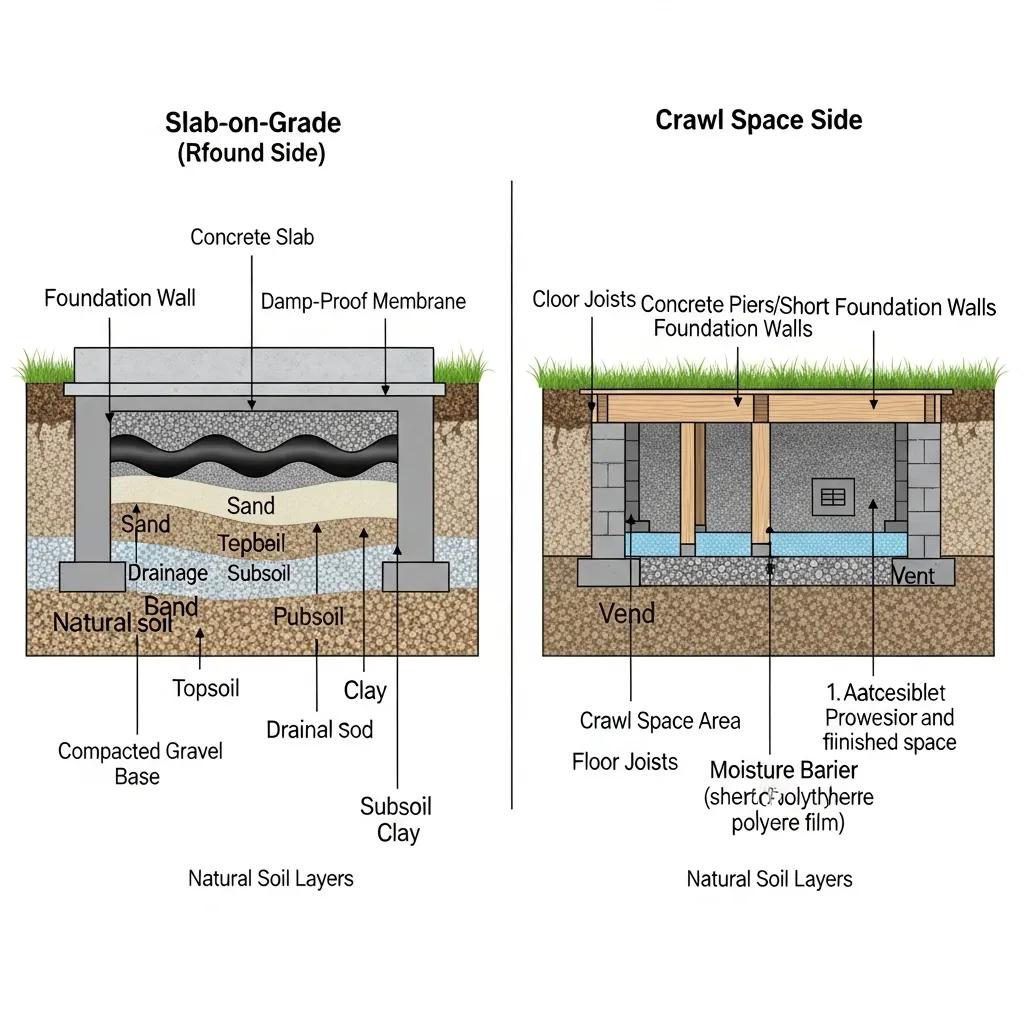
Shallow systems — such as slab‑on‑grade and crawl spaces — rest near the surface and are suited to lighter buildings on stable soils. A slab‑on‑grade is a single concrete pour on a prepared subgrade. It’s straightforward, cost‑efficient, and fast to install, especially where frost depths are shallow.
Crawl space foundations lift the structure a short distance above grade, creating a serviceable void under the floor. That gap simplifies plumbing and electrical access and helps separate the structure from ground moisture. When the subgrade is properly prepared, both shallow types spread loads across the soil effectively.
What Are the Features of Deep Foundations Such as Pier and Beam and Raft Foundations?
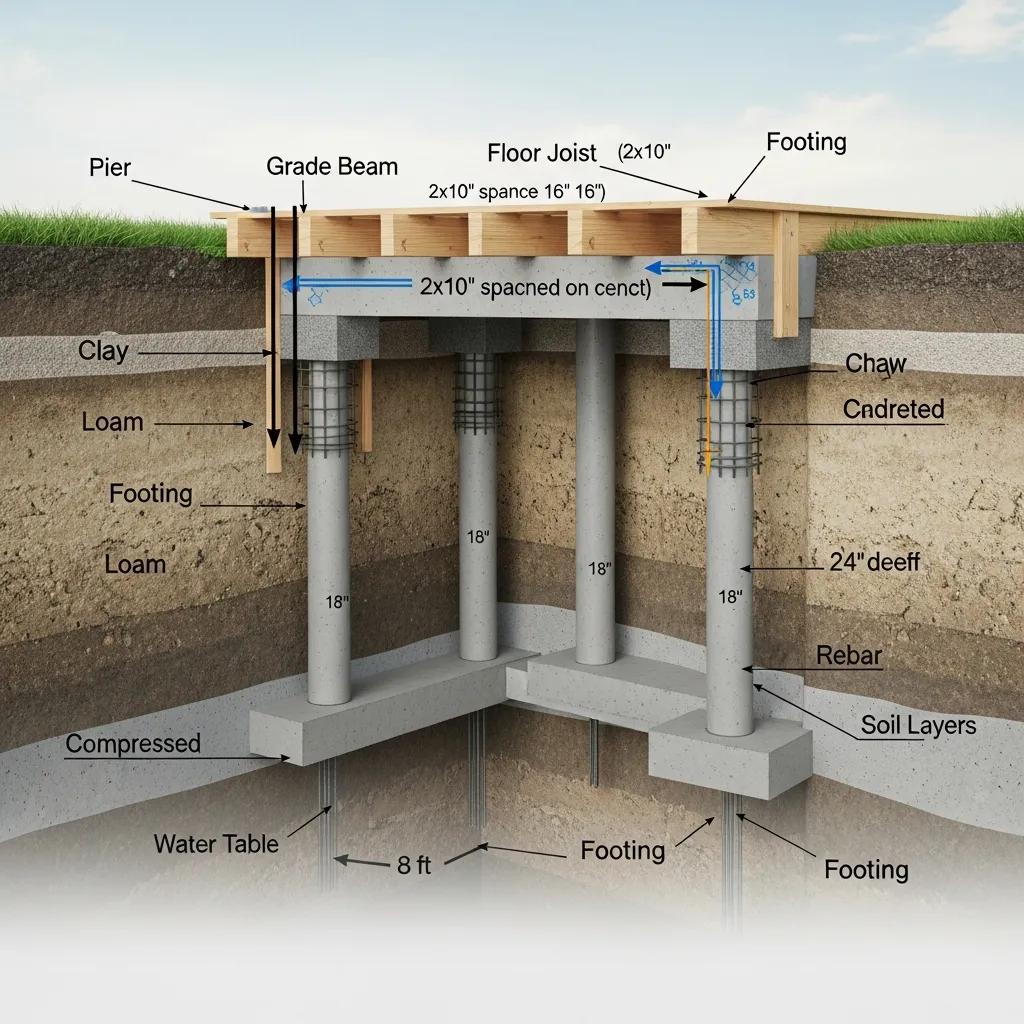
Deep foundations are chosen when surface soils cannot safely carry the building load. Pier and pile systems move loads down through vertical elements to firmer strata or bedrock. These are common where expansive clays or high water tables make shallow footings risky.
Raft or mat foundations distribute the building’s weight across a wide concrete slab. They work well for heavy structures or poor soils because a broad, stiff base reduces the chance of uneven settlement — a typical solution for commercial or multi‑story buildings.
What Are the Pros and Cons of Different Concrete Slab Foundation Types?
Picking a slab type requires balancing cost, access, maintenance, and site constraints. Below are the typical trade‑offs for slab‑on‑grade systems.
What Are the Benefits and Limitations of Slab-on-Grade Foundations?
Slab‑on‑grade foundations are common for good reasons:
- Cost‑effective: Simpler forms and less excavation usually reduce construction cost compared with basements or deep foundations.
- Faster schedule: A single pour and minimal subsurface work speed up completion.
- Lower routine maintenance: No crawl space removes a common area for pests and moisture buildup.
But they come with trade‑offs to plan for:
- Cracking risk: Slabs can crack from soil movement, shrinkage, or temperature changes if reinforcement and joints aren’t detailed correctly.
- Limited access: Once poured, under‑slab utilities are difficult and costly to modify.
- Moisture challenges: High groundwater or poor drainage can allow moisture to move through a slab unless proper vapor barriers and site drainage are used.
Careful design, thorough subgrade preparation, and correct detailing mitigate these risks — see the design guidance below for practical steps.
Concrete Slab‑on‑Grade Design & Construction
Successful slab design starts with intended use, anticipated loads, and soil behavior. Key items include preparing a stable subgrade, selecting appropriate reinforcement, accommodating shrinkage and temperature movements, and providing reliable drainage and vapor control. Following these principles reduces cracking and extends service life.
How Do Basement and Crawl Space Foundations Compare in Oklahoma City?
- Basement foundations: Offer finished space and added storage but require deeper excavation, robust waterproofing, and higher construction cost.
- Crawl space foundations: Generally less expensive than basements and easier to access for utilities, though they provide less usable living space and need proper ventilation and moisture control.
How Is Concrete Foundation Construction Performed Step-by-Step?
Concrete foundation work follows a predictable sequence. Quality at each stage is what makes a foundation last.
What Are the Key Stages: Site Preparation, Excavation, and Formwork?
- Site preparation: Clear vegetation and organic material, then grade for positive drainage so water runs away from the building.
- Excavation: Excavate to the depth required by the foundation type and local code; depths differ for shallow and deep systems.
- Formwork: Set temporary forms to shape footings and slabs and hold concrete until it reaches adequate strength.
How Are Reinforcement, Pouring, Curing, and Waterproofing Executed?
- Reinforcement: Place rebar or welded wire to control cracking and carry tensile demands where required.
- Pouring: Place concrete uniformly, consolidate to remove voids, and finish surfaces per specifications.
- Curing: Protect the concrete’s moisture and temperature during early curing so it develops intended strength and durability.
- Waterproofing: Where conditions demand, apply membranes, drainage boards, sealants, or exterior drains to keep water away from the structure.
What Are the Structural Concrete Design Principles for Durable Foundations?
Durable foundations start with sound structural decisions: match foundation type to soil, design for loads, and specify materials that resist local exposure.
How Do Soil Bearing Capacity and Load Distribution Influence Design?
Soil bearing capacity defines how much load the ground can take without excessive settlement. Engineers assess soil type, moisture, and compaction to select a foundation type and size footings accordingly.
Even load distribution lowers the risk of differential settlement and cracking. Designs track building weight and load paths from walls and columns, and they consider environmental factors so stresses stay within safe limits.
When conditions are unclear, geotechnical investigations and numerical analysis quantify bearing capacity and guide the best foundation approach.
Numerical Analysis for Soil Foundation Design & Bearing Capacity
Lab soil tests and numerical modeling inform accurate footing sizing and failure mitigation. Parametric studies and mixed‑soil techniques show how footing dimensions or soil improvements change safe bearing capacity. Combining test data with analysis helps select economical, reliable foundation details for varied soils.
What Materials and Reinforcement Techniques Ensure Structural Integrity?
Material selection matters: the right concrete mix, correct cover over rebar, and corrosion‑resistant options (for example, epoxy coating in aggressive soils) extend service life. Detailing reinforcement for expected loads, shrinkage, and temperature movements is essential to avoid long‑term problems.
How Does ACME Construction Deliver Superior Commercial Concrete Foundations in Oklahoma City?
ACME Construction is a local contractor serving Oklahoma City with hands‑on experience in residential and commercial foundations. We combine local soil knowledge, code familiarity, and strict quality control so clients get foundations that perform as intended and stand the test of time.
What Local Soil Conditions and Building Codes Affect Foundation Choices?
Oklahoma City soils range from expansive clays to sandy strata, so foundation selection must reflect local geotechnical conditions and code requirements. ACME factors soil behavior, drainage, and required code depths into every plan to reduce risk and ensure compliance.
How Does ACME’s Expertise and Project Management Ensure Quality and Compliance?
ACME’s project teams manage planning, inspection, and quality control throughout construction. From subgrade preparation to final waterproofing, our process uses checkpoints and documentation so clients receive foundations built to specification and local standards.
What Are Common Questions About Concrete Foundations and Their Answers?
Below are the frequent questions homeowners and builders ask about foundations, with straightforward, practical answers.
What Are the 3 Main Types of Foundations and Their Suitability?
- Shallow foundations: Best for lighter structures on stable soils — includes spread footings, slab‑on‑grade, and crawl spaces.
- Deep foundations: Used for heavier structures or weak surface soils — includes piers, piles, and deep footings.
- Basement foundations: Provide additional living or storage space when excavation and drainage make them practical.
What Steps Are Involved in Building a Concrete Foundation?
- Site preparation: Clear and grade the site.
- Excavation: Dig to the required depth.
- Formwork installation: Set forms to shape concrete.
- Reinforcement placement: Install rebar or mesh for strength.
- Concrete pouring: Place and finish the concrete.
- Curing: Allow proper curing time for strength gain.
- Waterproofing: Implement measures to prevent moisture intrusion.
Every project has unique needs; a site‑specific evaluation ensures the chosen foundation meets performance and budget goals.
Frequently Asked Questions
What Are the Key Considerations for Foundation Design in Different Climates?
Climate matters. In cold regions you must design for frost depth to avoid heave; in warm, variable‑moisture areas, controlling soil moisture is critical to limit expansion and contraction. High‑rain locations usually need stronger drainage systems. Matching materials and detailing to local weather patterns helps keep foundations stable over decades.
How Do I Know If My Foundation Needs Repair?
Look for telltale signs: visible cracks in walls or floors, doors and windows that stick or won’t close, sloping or uneven floors, and water pooling near the foundation or in basements. If you spot these symptoms, contact a foundation specialist for an assessment before damage progresses.
What Is the Role of Drainage in Foundation Longevity?
Good drainage is essential. Direct surface water away from the foundation with slope grading, functional gutters and downspouts, and perimeter drains where needed. Effective drainage reduces hydrostatic pressure and soil erosion — both common causes of foundation distress.
Are There Eco-Friendly Options for Concrete Foundations?
Yes. Using supplementary cementitious materials (like fly ash or slag), recycled aggregates, or locally sourced materials can lower a foundation’s carbon footprint. Permeable concrete and careful site planning also reduce runoff. These options maintain performance while improving environmental impact.
What Innovations Are Emerging in Concrete Foundation Technology?
Recent advances include high‑performance concrete mixes that resist cracking, embedded sensors for real‑time structural monitoring, and early uses of 3D‑printed forms to speed unique details. These technologies help improve durability, lower long‑term costs, and give better data for maintenance planning.
How Can I Ensure Compliance with Local Building Codes for Foundations?
Work with a licensed contractor or structural engineer who knows local regulations. They’ll secure permits, follow design specifications, and coordinate inspections. Reviewing your municipality’s code guidance and holding pre‑construction meetings reduces surprises and helps keep the project on schedule.
What Factors Should Be Considered When Choosing a Concrete Foundation Type?
Choose a foundation based on soil conditions, building loads, climate, and local code requirements. Soil bearing capacity controls how much weight the ground can accept without excessive settlement. The structure’s function (residential vs. commercial), frost depth, and moisture regime also affect the right choice.
How Can I Prevent Moisture Issues in Concrete Foundations?
Prevent moisture by grading the site so water moves away from the foundation, installing perimeter drains like French drains where needed, and using exterior waterproofing or vapor barriers under slabs. Keep gutters and downspouts well maintained to direct roof runoff away from the foundation.
What Maintenance Is Required for Concrete Foundations?
Foundations require periodic inspection, not heavy daily maintenance. Check for new cracks, standing water, or signs of settling. Seal small cracks promptly to keep moisture out, maintain site drainage, and call a professional if you notice structural symptoms.
How Do Environmental Conditions Affect Concrete Foundation Durability?
Temperature swings, moisture cycles, and soil chemistry all influence performance. Freeze‑thaw, high groundwater, and aggressive soils can cause cracking or corrosion if not addressed in design. A local environmental assessment guides material selection and protective measures.
What Are the Signs of a Failing Concrete Foundation?
Key warning signs include widening cracks, doors and windows that stick, noticeably uneven floors, or water intrusion in basements or crawl spaces. If you see these, consult a structural engineer or foundation specialist quickly to diagnose and plan repairs.
Can I Build a Foundation on Expansive Clay Soil?
Yes — but it requires tailored design. Expansive clay swells and shrinks with moisture changes, which can move foundations. Typical solutions include deep foundations (piers or piles) that reach stable layers, soil‑improvement methods, and strict moisture control around the building. A geotechnical study will show the most reliable approach for your site.